
Mixing with Feeling: Tim Perlepes on Trusting His Ears, Not the Screen
For mix engineer and producer Tim Perlepes the best decisions are not made by watching meters but by trusting his ears.
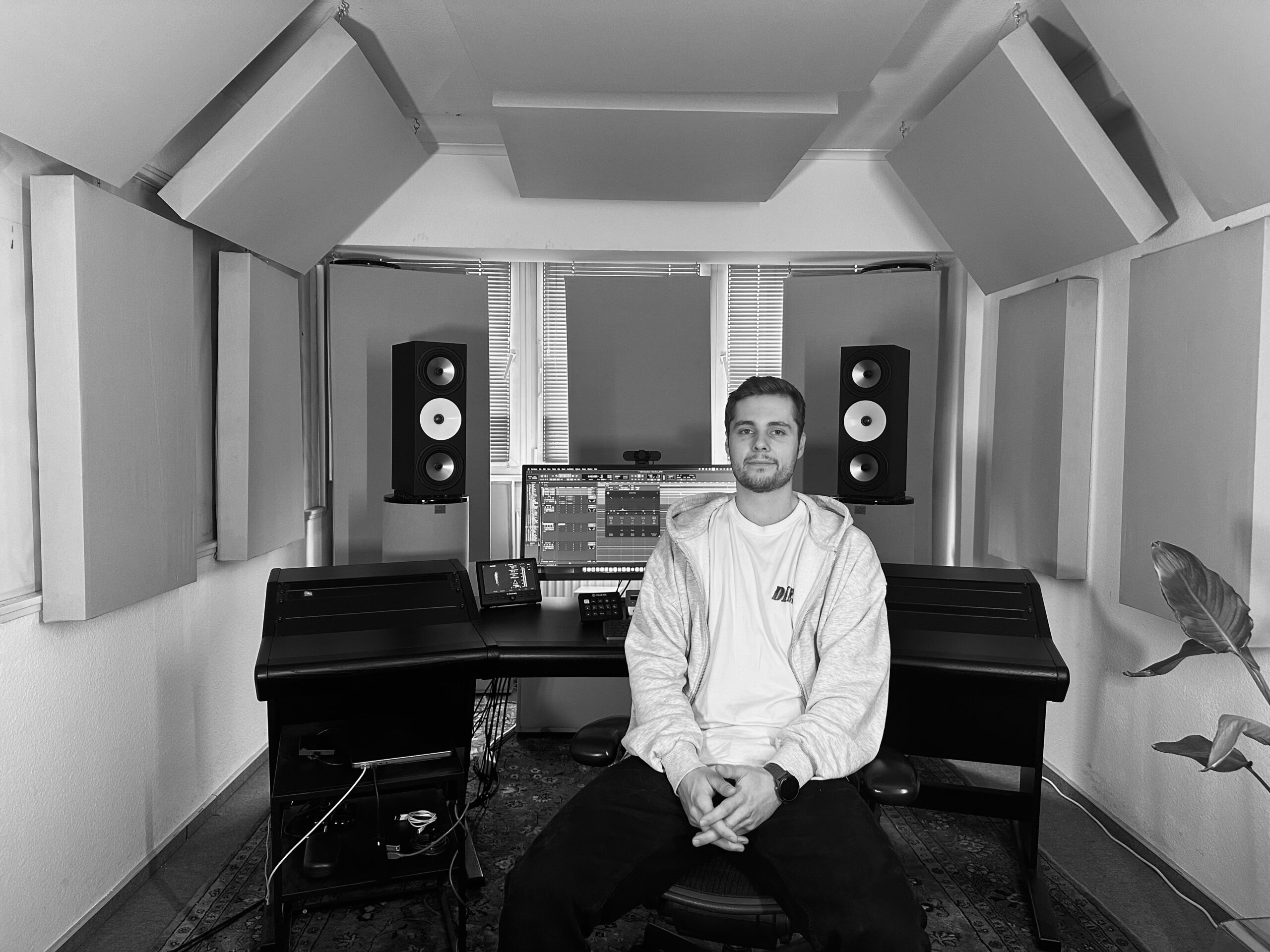
Lübeck-based mix engineer and producer Tim Perlepes has steadily carved out his place in the German music scene, building his career through curiosity and a willingness to learn by doing. From self-taught beginnings to working with established artists, his approach has gradually evolved from pure technical experimentation into something more instinctive and musical. “I started out producing EDM when I was 13 and later released my own music under the name Leo Vince.” Tim recalls.“I needed to mix and master our songs, and we didn’t have the budget for a professional engineer, so I just did it myself.”
What began as a practical necessity soon turned into a profession. Through a growing client base and constant self-education, Tim slowly shaped his craft and his career. Today, from his studio, he spends his days refining vocals and making sure every mix translates beyond the room it was created in. The music has grown more ambitious over time, and with it, the expectations placed on him, pushing his work to become not only more precise, but also more intentional.
Finding Honesty in the Mix
As Tim’s workload increased, the limitations of his monitoring setup became increasingly apparent. Like many engineers, he had spent years working in small rooms with minimal acoustic treatment, compensating by relying heavily on headphones and constant cross-checking to make sure his mixes would hold up elsewhere.
When he began searching for a new monitoring system, Amphion immediately stood out. The sealed enclosure design promised tighter low-end behaviour and less dependence on ideal room conditions, an important consideration given the spaces he was working in.“The rooms I had worked in before were not always ideal for mixing, small spaces with no proper acoustic treatment.” He explains.“Amphion’s sealed box design stood out right away. I tested other speakers too, but I loved the musicality of Amphion.” The Two18s did not exaggerate or smooth over problems; instead, they showed exactly what was happening inside a mix. With his previous setup, he relied on constant cross-checking: Export, listen on headphones, return to the session, tweak, and repeat. With Amphion, that cycle started breaking. “When it sounds good on the Amphion, then it actually is. There’s no translation guessing anymore.”
That honesty encouraged Tim to trust his own decisions, reducing the urge to stack processes simply because they felt expected, and allowing each choice to be made in service of the music rather than the workflow.
Small Moves, Big Impact
Clearer monitoring quickly reshaped Tim’s workflow, exposing how many processes had quietly become habits rather than necessities, and encouraging a more deliberate approach to every decision in the mix.
Vocals were the first area to change. Instead of automatically inserting compression, Tim began shaping dynamics with clip gain, adjusting levels by hand before reaching for processors. “Everyone says you have to compress vocals.” He explains. “I tried a mix with no compression on the lead vocal, only clip gain and different saturators, and it sounded fuller and more honest.” Compression remains part of his toolkit, but it is no longer a default choice, only something added when it truly serves the song.
EQ decisions also became more precise. Instead of broad shelves, he now uses more bell boosts, targeting only the range that needs emphasis. “If I only need a little shine between 10 and 13 kHz, I boost only that.” High-cutting became more common as well, especially on vocals, helping reduce unnecessary top-end content and clean up space in the mix. Another important shift was learning to remove plugins altogether. “If it doesn’t help, I’ll delete it.” The workflow moved away from building complex chains and toward making fewer, more intentional choices.
Turning Off the Screen
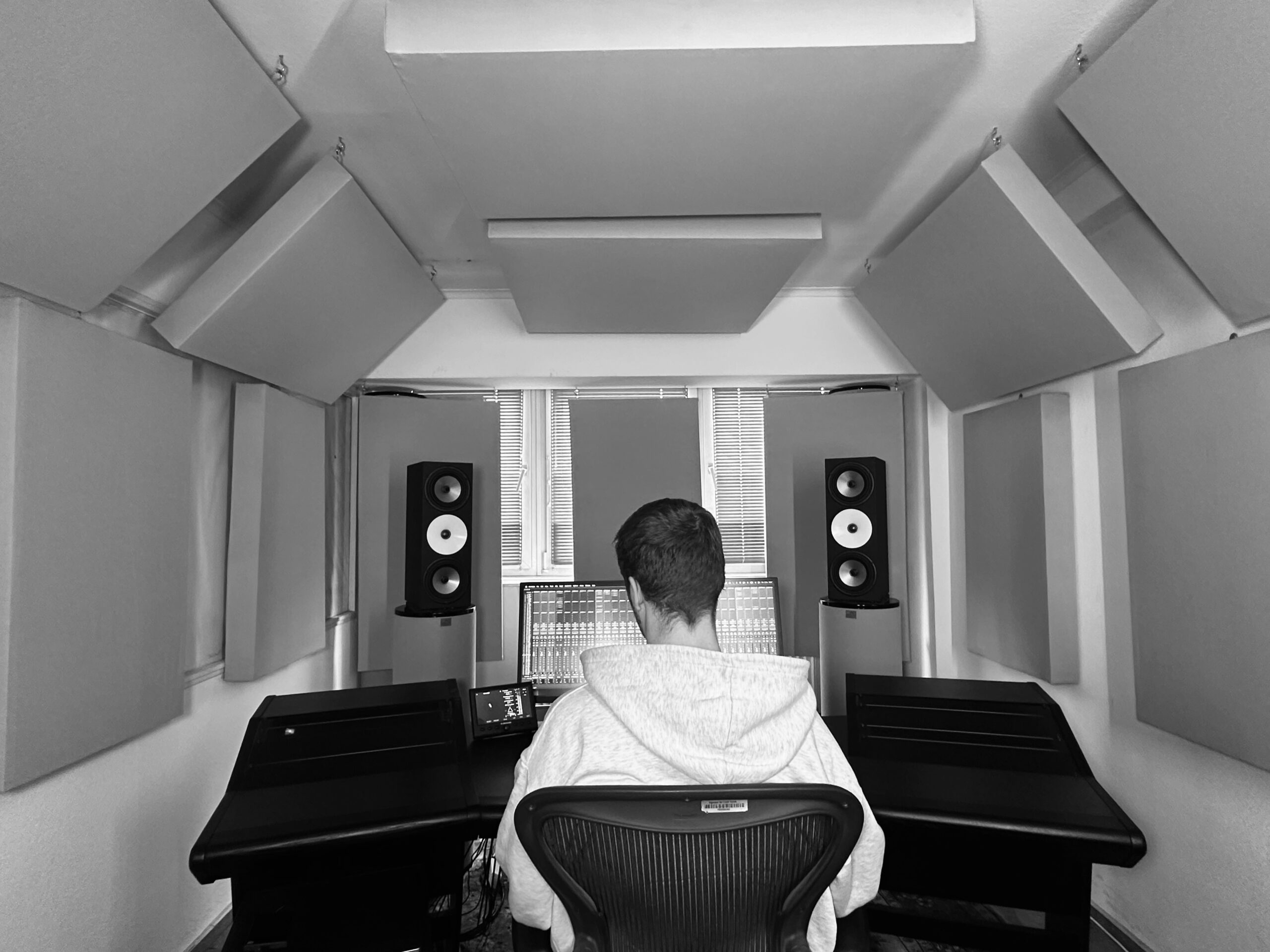
At a certain stage in every mix, Tim removes all visual interference, switching his screen to black and letting the sound stand on its own. “At a certain point I turn my screen black and just listen, and if I get through the whole song without wanting to change anything, it’s done.”
This moment is not analytical but emotional, a shift away from checking technical correctness toward listening for a sense of completion. Tim is no longer asking whether the mix is right on paper, but whether the song feels finished, whether it holds together from beginning to end without calling for intervention. For him, this is the point where any further adjustment would not improve the music, only change it. “It’s hard to describe,” he says.“You just know.”
A Portable Studio Experiment
Tim’s trust in his monitoring was tested in an unexpected setting during a trip to Poland. He packed his Two18s into their wooden transport box and loaded them into a car with friends, treating the setup like a mobile extension of his studio. The journey took an amusing turn at the border, where officials grew suspicious of the crate, convinced someone might be hiding inside. “They made me open the box and take the speakers out.” He laughs.”I don’t think they see loudspeakers in wooden cases every day.”
The Airbnb itself offered none of the comforts of a controlled studio environment. One wall was entirely glass, there was no acoustic treatment to speak of, and speaker placement options were limited. Rather than fighting the room, Tim adapted. He experimented, settled on a workable position close to a wall, kept the listening levels low, and relied on his deep familiarity with the Two18s. Occasional cross-checks on headphones helped confirm decisions, but the core of the work stayed on the speakers.
From that improvised setup, several professional projects were completed. “The clients never guessed I was outside my studio,” he says. “Knowing I can trust the speakers anywhere takes so much stress away. Turnarounds can be fast, artists expect quick results.”
The experience reinforced a simple truth for Tim: rooms change, but a trusted reference keeps the work consistent, wherever he sets the speakers up.
Mixing by Feel
For Tim, the Two18s did more than improve translation. They reshaped the way he thinks about mixing itself. “They made me a better mixer. I focus less on numbers and more on emotion. I can trust my ears. That’s everything.”
Tim represents a generation of engineers who are flexible and unafraid to question inherited rules. His approach is grounded in experience rather than written guidelines. The goal is never technical perfection for its own sake, but clarity and emotional impact. If something does not serve the sound, it does not stay, no matter how correct it might look on paper.
See more:
Tim “Leo Vince” Perlepes – Selected Credits
Amphion – Two18