
It’s Been A Minute! 50 Years in the Business
An interview with the award-winning and prolific producer/composer, Fred Mollin, following the release of his memoirs – “Unplugged”
Nashville, USA – Some four years ago, we spoke with American/Canadian producer and composer, Fred Mollin, on a recent project of his “Fulfilling Artists Visions”. But this time we celebrate his own story “Unplugged”, and Fred generously gave of his time, not just to provide replies to our interview-questions, but also to supply us with what we call “Mollin’s Minutes”. These 13 short reels, each around a minute in length, are a selection of insights from a true industry veteran – and in his own voice –especially for those working up their way up through the music business. Fred has contributed so much to the entertainment industry in so many critical roles – Record producer, Film and TV composer, Songwriter, Arranger, Musical director, and Band leader – that we felt a need to share just a little of his wisdom. And Amphion is honored to be a small part of his music oeuvre. The list of iconic artists and major studios he has worked with are both enormous and consequential, and we invite you to visit Fred’s homepage – at the base of this interview – to see what half-a-century of a life dedicated to music has delivered.
It was May 2021 when we first interviewed you, though the focus was on your work with the world renowned songstress Mandy Barnett, the late/legendary arranger Sammy Nestico, and the release of “Every Star Above”. Now, May 2025, and with the launch this month of your memoirs “Unplugged”, it’s a great time to unpack and share for the Amphion family of music creators, producers, and engineers Fred-Mollin-specific!
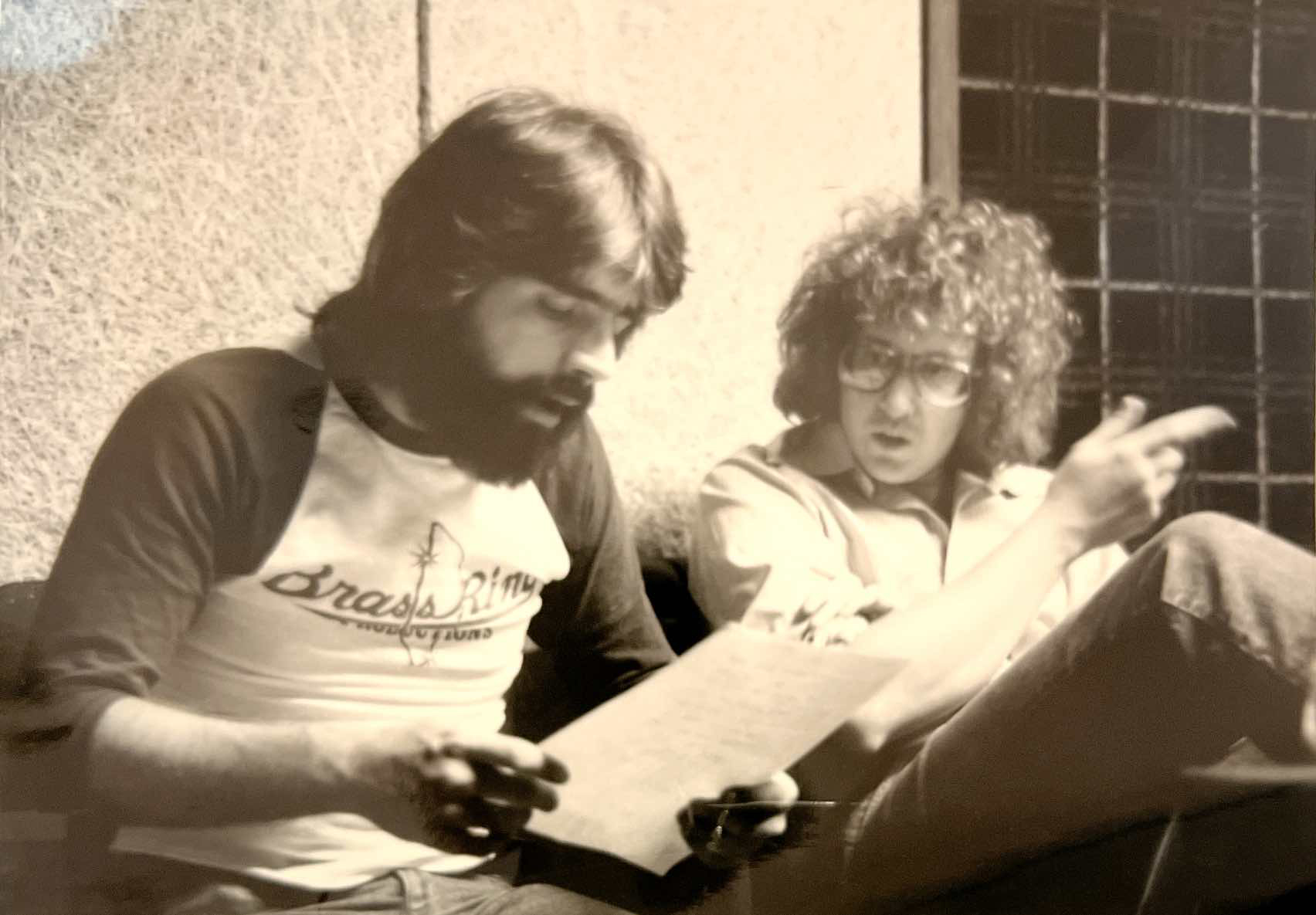
So firstly, who/what triggered this book; how long from inception to publication; and given the volume of talent, a literal “Who’s Who” of the industry, how did you determine what stories made the cut?
Well, what triggered the book was that I knew I had so many stories in my brain – and I consider my brain my ‘hard-drive’ – that I simply didn’t want to let the hard-drive get too full. So I decided to start dictating into my iPhone … stories of all the different projects and people I had worked with. I did about twenty of these stories, and when I listened back to them all I thought, “You know, I could write a book !” … And that was my first mistake, because it actually meant I had to follow-through and finish it!
It took another four years before I had everything I wanted ‘done” included in the book. Then, I had an editor take all of my information and put it in a proper timeline – after which I re-edited it. I would say almost five and half years later, it was finished. And I can tell you that it was extremely hard to do, as I had to make a definite decision on what stories to leave out, because frankly, the book could be at least twice as long. I just had to make decisions. Sometimes they were just based on how well-known the project was. Sometimes it was decisions based on if I felt more love for a certain project than another, or a certain person or another. But I wanted to tell the truth, and that’s what I hope I did in this book.
Visitors to our social media and homepage make up a wide cross section of the entertainment industry – freelance engineers, commercial studios, broadcasters, music creators and producers. Perspectives from a music industry veteran are very valuable, especially for those starting up in the business. You have provided us with 13 great, short reels for us – which we’ve titled “Mollin’s Minute” – and you touch on many of these themes in your book.

How prepared were you when you entered this industry ? Who were some of your mentors ? How much more difficult is the business now compared to your entry years ?
I fell into producing. I was not expecting to be a record producer – and by the way, ‘record producer’ is a terrible misnomer, because the truth is it’s really like a film director. So, whoever came up with the term was wrong. It really should termed record supervisor or record director. Anyway, I became a producer because I fell into it, and it felt good. I had already been a musician, and had played lots of gigs as a singer-songwriter. So I wanted to pursue that. By 1972, I was starting to get a little bit further ahead in Toronto with that. A friend asked me to produce his demo, and everything lead from there.
The next thing you know, I was producing his first album, and then the third album had “Sometimes When We Touch” (1977). All of a sudden, we were being whisked to Los Angeles by Clive Davis. I don’t think I was particularly prepared to be a record producer. As far as mentors go, I didn’t have any. We really were flying blind. We were in Toronto, and I didn’t know anybody in the business who I looked up to as a producer. So, with Matthew McCauley, who was my partner at that time in the first four years of producing, we sort of just winged it, and we learned while we earned.
There’s no comparison to when I started making records and what it’s like now. It’s simply a whole-other-world thanks to the technology or – maybe not ‘thanks’ to it – but we have to accept it. And the truth is, when I started making records, the recorded music was not ‘free’ as it is now. That alone changes everything. It’s changed the entire business. There’s no longer product being needed to be made. So record labels simply sit back and watch their back-catalog make a fortune for them in streaming. They really don’t even have to make product anymore. That alone will tell you how different things are. Radio means nothing, comparatively. In the old days, radio meant everything. Broadcast television meant something. It doesn’t mean anything anymore. Everything is streaming. Everything is digital. Everything’s been turned upside-down. I’ll tell you one thing … If I was starting out now, I don’t think I would have tried!
Amphion is a company that manufacturers monitors for the studio and speakers for the home. In fact, we occasionally see a crossover where prosumer audio customers invest in some of our studio gear. So this interview is for both those who “create” and those who “enjoy”. As many audiophiles and music connoisseurs make up our global readership, could you share a selection of some of your favorite recordings “Made with Amphion” and any backstories on their production?
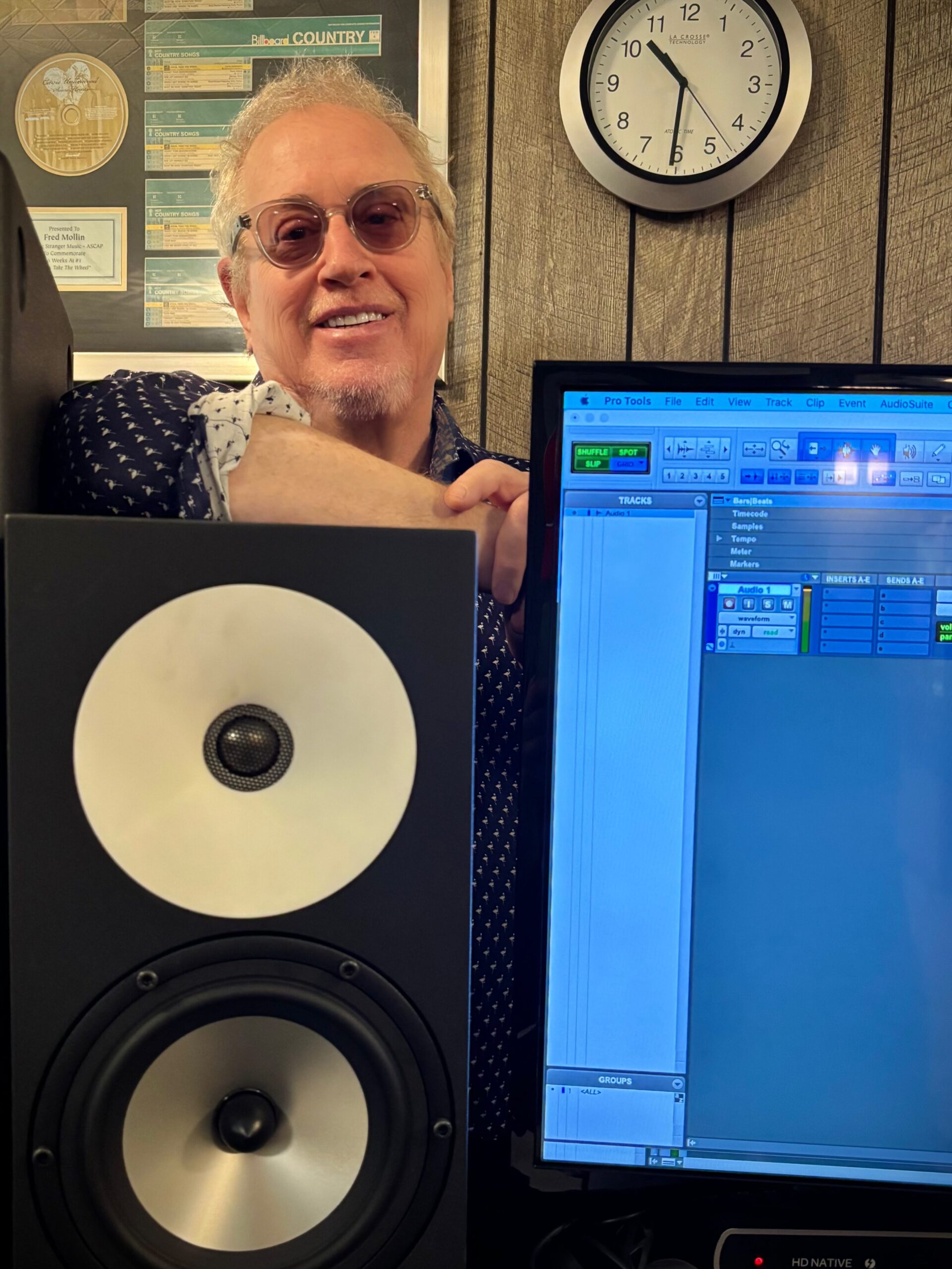
The most recent and wonderful project that was mixed on Amphion – the One18s – was the Bill Medley album “Straight From The Heart” (2025), which is an incredibly historic record, with the historic voice of Bill Medley of The Righteous Brothers, doing a very ‘Americana/rootsy’ album of classic Country songs. And again, the space and the sound, that was so helpfully facilitated by Amphion monitors, is very evident in the final version of that album.
Amphion’s One18 has been described as our “workhorse”, and studios – large and small – celebrate its versatility and sonic merits. While your work takes you to a wide range of studios with varying speaker brands, can you tell us a) how you use the One18 in your workflow, b) what are some of the merits that you feel the One18 brings to your final results, and c) any other Amphion models that catch your eye/ear that you’d like to explore?
I think the One18s bring so much to the table, because even at the lowest volumes, at the mid-level volume that we like to work in during the day, they’re ‘true’, you know. And if a monitor could be soulful, I think these are soulful monitors. The design became something that was much more natural. So between ‘truth’ and the ability to not have any ‘fatigue’, these particular speakers are superlative.
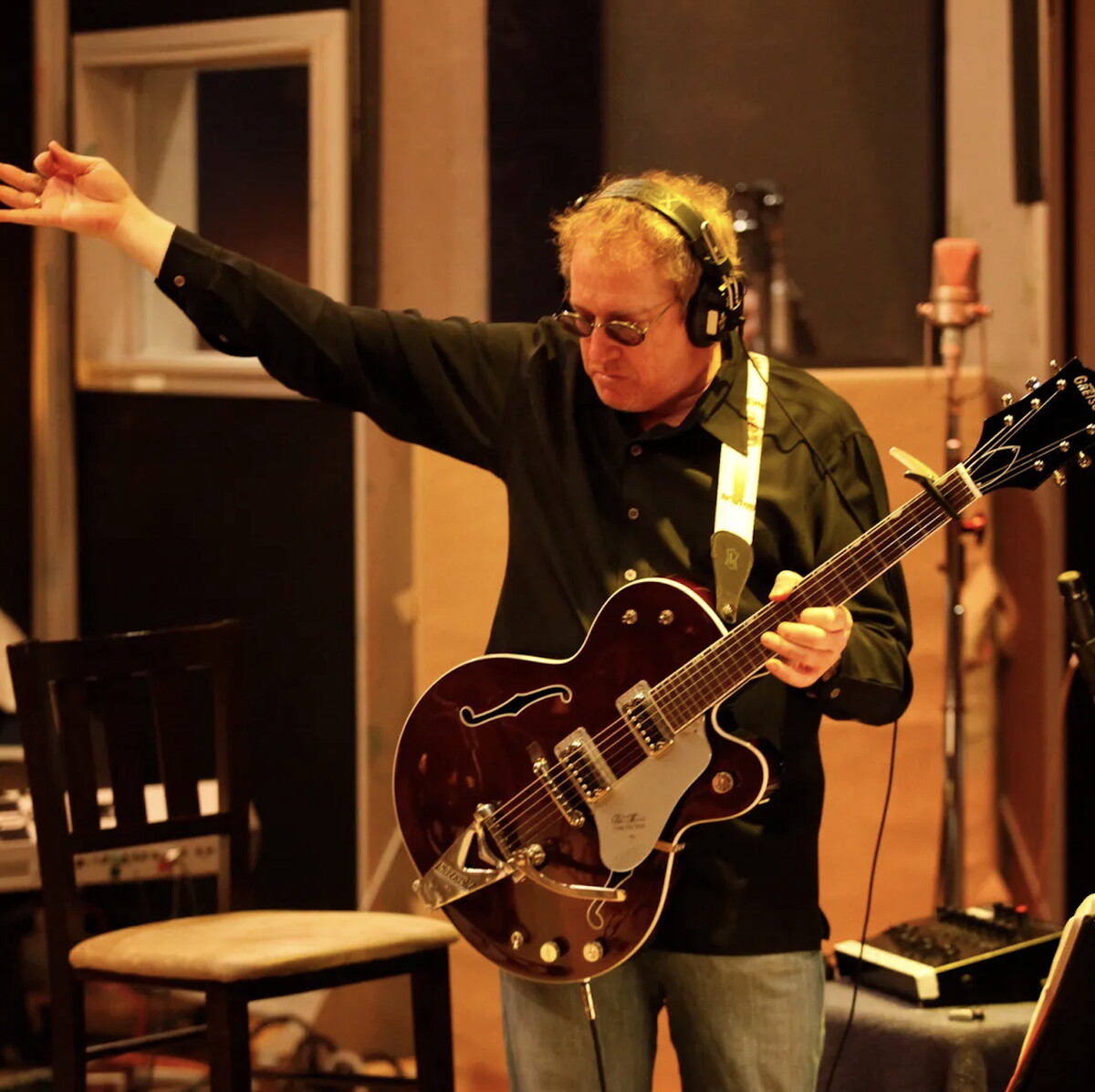
You’ve been heavily involved in film composing. Traditionally, films are released to cinemas, followed by various home entertainment distribution platforms – though for some years they’ve gone direct to digital/streaming too. You’ve likely heard your works through Surround, DTS, SDDS, THX, and Dolby Digital formats. Do you compose with an audience “cinema-room experience” in mind? Or do you compose-to-image only? Do cinema sound-systems deliver sufficient nuance?
You know, I haven’t done film or television composing since 2001. But I did it straight through from 1985 to 2001 – sometimes doing as many as three TV series at once. A lot of times I receive questions asking if I mixed for the theatre, or if I mix for television. The honest-to-god truth is we were just making stereo mixes and were just part of the overall sound of the film or TV episode. So I hate to say it, but the last thing we really were concerned about was actually how it was going to sound on speakers. You were competing with sound effects, foley, voice-replacement, ambient sound, and your music was just one part of the actual sonic-scape. But when I did a soundtrack album, I would have a chance to remix, and really care about how it sounded on a CD. And that was a highlight on occasion. For the “Friday The 13th” TV series (1987~1990) soundtrack to the “Forever Knight” (1992~1996) vampire series soundtrack CDs, we took our time with those, and made them sound really good for the listener.
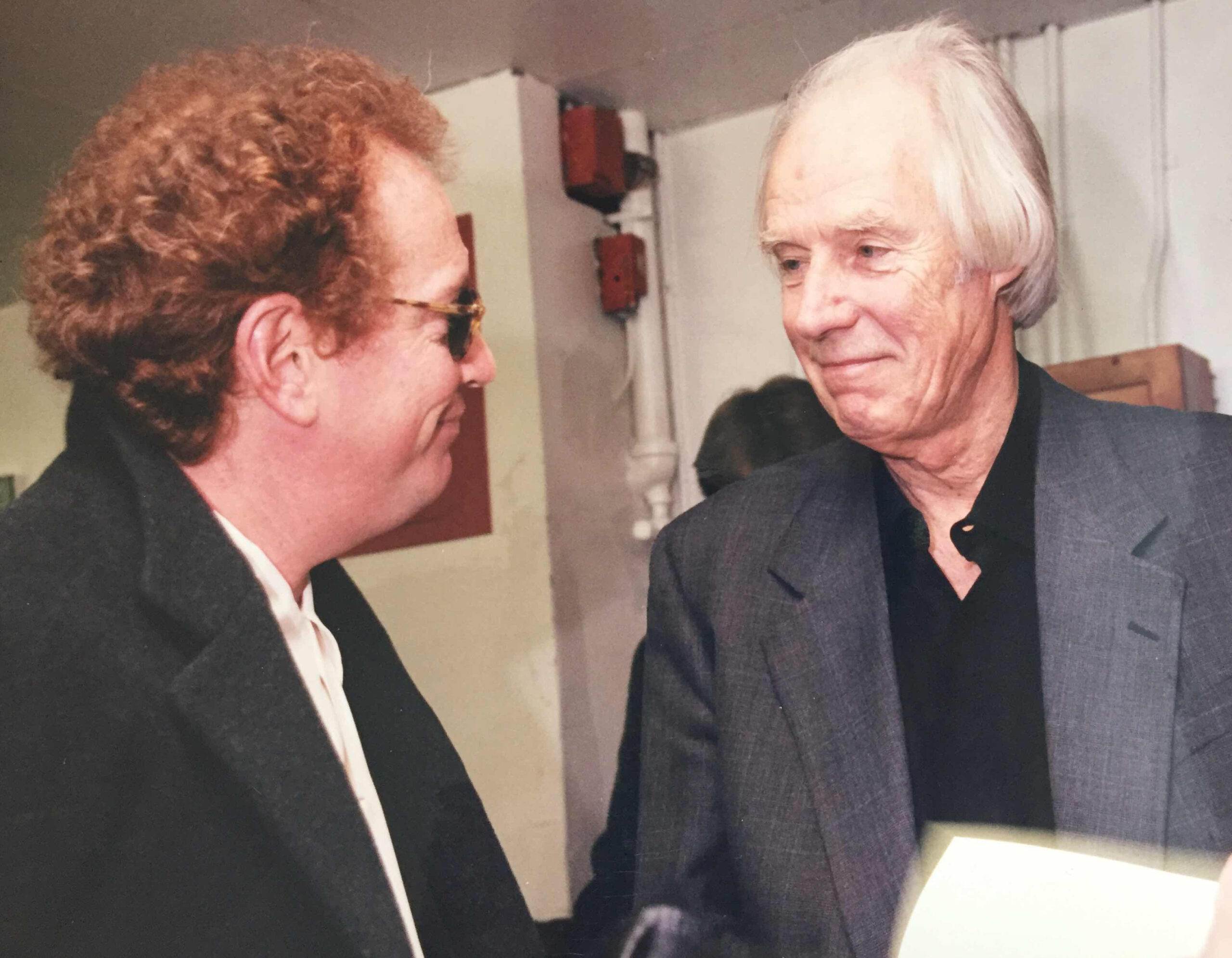
Amphion has sonic solutions for stereo, surround, and immersive audio, with the latter area being boosted since Apple’s 2021 announcement about Spatial Audio. What’s your take on Dolby Atmos and Sony 360 Reality Audio for “music”? Do you see it as a “fad” or as the “future” for music production and consumption? Or are its merits mainly for games and cinema? Have you worked in any of these immersive audio formats or intend to?
I have strong feelings about Dolby Atmos and Spatial Audio. First of all, most people don’t have the ability to ‘listen’. Probably 2% of the population have the ability, and 1% have the chance. So, until automobile manufacturers can find a way to do Dolby Atmos and Spatial Audio for an actual car system, I just don’t see any way you can possibly ask a listener to sit down with a Dolby Atmos experience – unless they want to spend a couple of thousand dollars on a proper room. I think it’s sad, because everytime we get a chance to expand sound it’s wonderful. But I find this one is unfortunately ‘ill-timed’. People now listen to music on their iPhone; they listen to it on their computer; they listen to it in their car from streaming. But no one seems to care about the true sonic depth or high fidelity – especially things like Spatial Audio and Dolby Atmos. So, unfortunately, I’m not a ‘cheerleader’ until it becomes easy to listen to for everyone.
About Fred Mollin: The Official Fred Mollin Website – Better Living Through Music
Fred Mollin “Unplugged” Memoirs here: Fred Mollin Unplugged
Fred Mollin Discography at AllMusic: Fred Mollin | AllMusic
For more information on Amphion One18: One18 Studio Monitor | Amphion